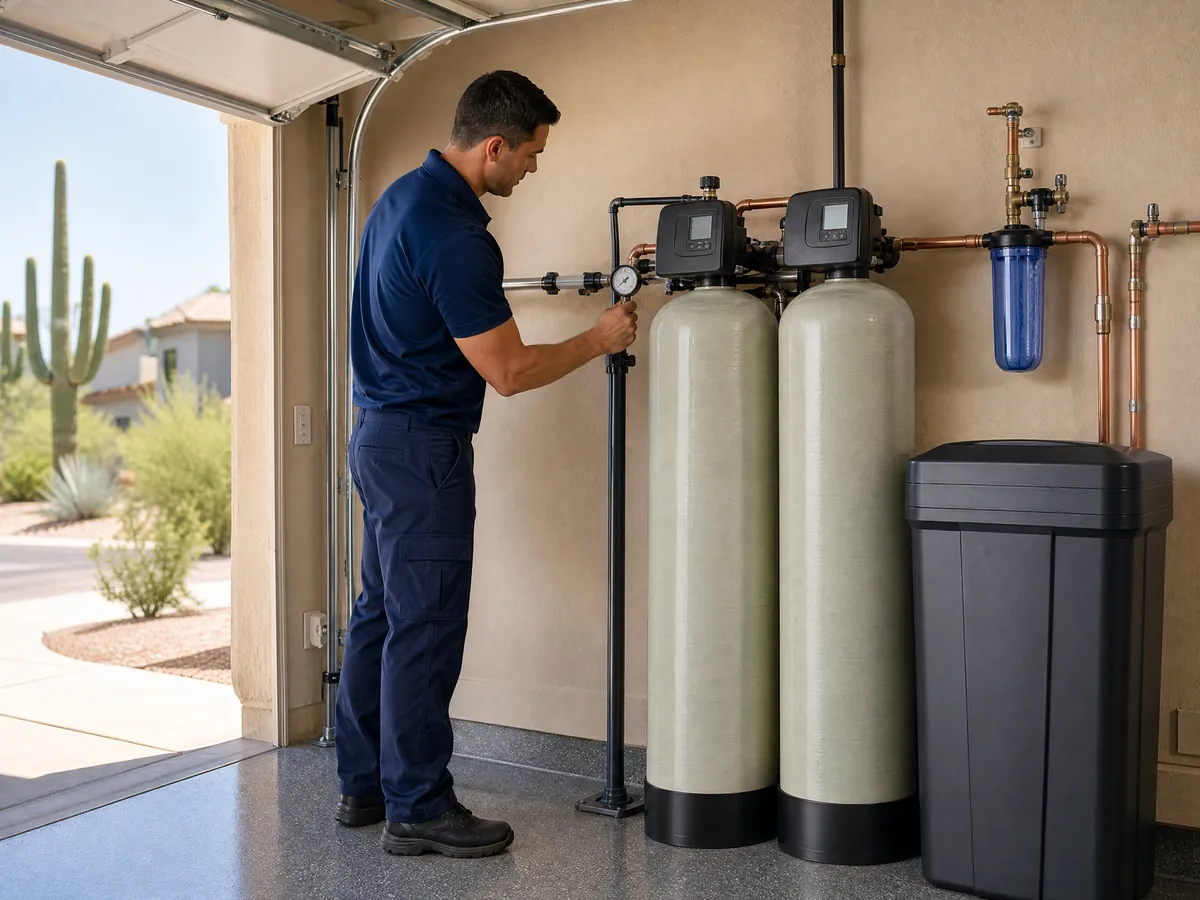
A water softener addresses hardness minerals throughout the home. We review the treatment goal, household demand, location, drain and power access, and the existing plumbing before recommending a setup.
Direct answer
What this service is designed to solve
A water-softener installation should be planned around the household’s hardness goal, plumbing entry point, drain and power access, equipment space, bypass needs, and ongoing salt and maintenance responsibilities. A softener treats hardness; it is not a universal contaminant-removal system.
Common signs and symptoms
- White mineral residue on fixtures
- Spotting on glass and dishes
- Scale around aerators and showerheads
- Interest in reducing hardness throughout the home
What an appointment can determine
- Whether the visible plumbing and available space support a practical whole-home softener layout
- What bypass, drain, power, and equipment-access needs affect installation
- Which household-use questions should inform sizing
What may require more access
- A home’s complete water chemistry without appropriate testing or utility data
- Future salt use or regeneration frequency without real household use
- Whether one device meets every taste, odor, hardness, or drinking-water goal
What to expect during the appointment
- 1
Confirm the symptom, property location, and service goal before work begins.
- 2
Inspect the accessible components and explain what can—and cannot—be concluded from that inspection.
- 3
Present practical options and an upfront flat-rate estimate before authorized work starts.
- 4
Complete only the approved scope, then test the affected plumbing and explain the result and care notes.
Repair, maintenance, and replacement paths
Softener
Target hardness minerals throughout the home when that is the primary goal.
Treatment combination
Pair hardness treatment with other equipment only when a separate filtration or drinking-water goal is defined.
No installation
Use maintenance or point-of-use choices when whole-home hardness treatment is not the homeowner’s priority.
Before a recommendation
What affects the repair or installation plan
- Household size and typical water use
- Available loop, drain, power, and floor space
- Desired hardness setting
- Ongoing salt and maintenance preferences
What affects cost
- Equipment capacity and control type
- Existing loop or main-line access
- Drain, power, bypass, and discharge route
- Space, floor protection, and service clearance
- Additional filtration or RO scope
Typical approved scope includes
- Goal and installation-site review
- Approved plumbing connections and bypass scope
- Startup and basic operating explanation
- Leak and function check of installed plumbing
Scope boundaries
Common exclusions unless stated in writing
- Promises to remove contaminants outside equipment certification
- Salt delivery, consumables, or ongoing service unless contracted
- Cabinet, electrical, drainage, or finish work not listed
Qualified workmanship warranty: Dream Team Plumbing provides a two-year workmanship warranty on most qualifying completed work. It applies to labor performed by Dream Team Plumbing and does not cover manufacturer defects, unrelated system failures, water damage, misuse, neglect, improper maintenance, unauthorized alterations, or conditions outside the approved scope. Read warranties and service policies.
East Valley context
Why the property and location matter
Hardness varies by water source and location across the East Valley. Public reports and field testing can inform the conversation, but equipment should be selected for the actual household goal.
Straight answers
Water Softener Installation FAQs
Is a water softener the same as a drinking-water filter?
No. A softener treats hardness for the whole home. Drinking-water filtration or reverse osmosis addresses a different goal, usually at a specific faucet.
Does every home have a softener loop?
No. Some homes have a prepared loop and others require a different connection plan. The installation area should be inspected.
What maintenance does a softener need?
Needs vary by equipment, but homeowners commonly monitor salt, keep the area accessible, and follow the manufacturer’s cleaning and service guidance.