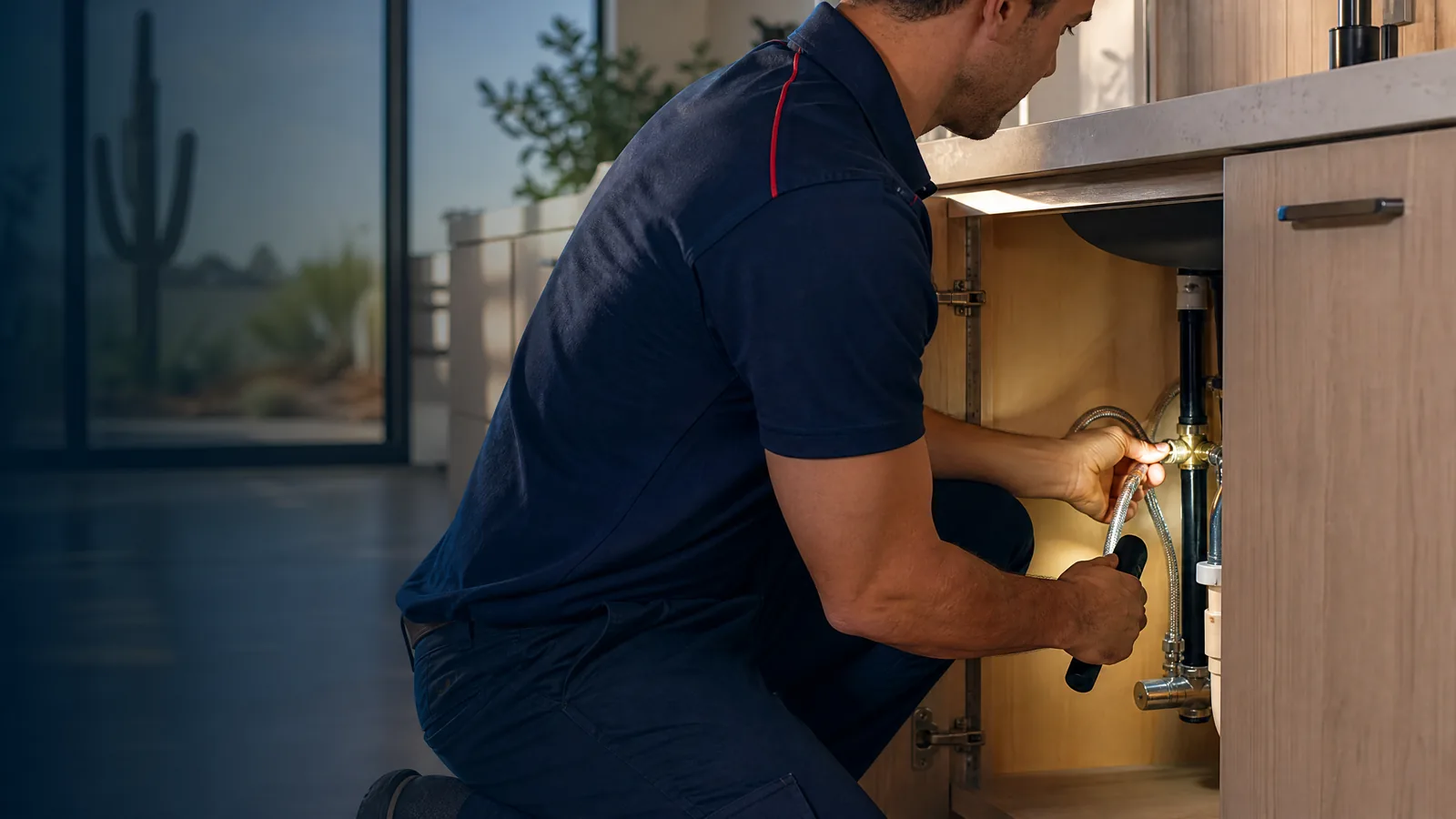
A toilet can waste water quietly, leak at the supply or base, or move because of a flange or mounting issue. We inspect the tank components, shutoff, supply line, bowl, base, and drain behavior before recommending repair or replacement.
Direct answer
What this service is designed to solve
Toilet service starts by separating tank-component, supply, shutoff, base-seal, flange, fixture, and drain problems. Running or leaking components may be repairable; cracks, instability, repeated failures, fit, or homeowner goals may support replacement.
Common signs and symptoms
- Constant running or intermittent refill
- Water near the supply connection or base
- A bowl that rocks or feels loose
- Frequent clogs or weak flushing
What an appointment can determine
- Whether accessible tank, supply, shutoff, bowl, base, or flushing conditions explain the symptom
- Whether the fixture is stable and compatible with repair
- What rough-in, flange, shutoff, and floor factors affect replacement
What may require more access
- Drain-line condition beyond the fixture without separate access/testing
- Hidden flange or subfloor condition before removal
- Water damage or finish restoration
What to expect during the appointment
- 1
Confirm the symptom, property location, and service goal before work begins.
- 2
Inspect the accessible components and explain what can—and cannot—be concluded from that inspection.
- 3
Present practical options and an upfront flat-rate estimate before authorized work starts.
- 4
Complete only the approved scope, then test the affected plumbing and explain the result and care notes.
Repair, maintenance, and replacement paths
Repair tank or supply
Replace serviceable components or connections when the fixture remains suitable.
Reset fixture
Remove and reset only when base/seal/flange conditions and scope are understood.
Install replacement
Use a compatible toilet based on rough-in, footprint, clearance, parts, and homeowner preference.
Before a recommendation
What affects the repair or installation plan
- Tank-part condition and availability
- Base seal, flange, and floor condition
- Rough-in dimensions for replacement
- Whether drainage symptoms extend beyond the toilet
What affects cost
- Repair parts or replacement fixture
- Shutoff and supply condition
- Flange, seal, bolts, and floor condition
- Rough-in, clearance, and removal
- Drain service or finish repair outside fixture scope
Typical approved scope includes
- Accessible fixture and symptom review
- Approved repair/reset/installation
- Flush, fill, shutoff, stability, and leak checks
- Scope notes for flange/floor/drain conditions
Scope boundaries
Common exclusions unless stated in writing
- Drain cleaning unless listed
- Subfloor, tile, flooring, cabinet, wall, or water-damage restoration
- Owner-supplied fixture defects or missing parts
Qualified workmanship warranty: Dream Team Plumbing provides a two-year workmanship warranty on most qualifying completed work. It applies to labor performed by Dream Team Plumbing and does not cover manufacturer defects, unrelated system failures, water damage, misuse, neglect, improper maintenance, unauthorized alterations, or conditions outside the approved scope. Read warranties and service policies.
East Valley context
Why the property and location matter
Older shutoffs, mineral buildup, and differing rough-in dimensions can turn a simple toilet swap into a broader compatibility decision.
Straight answers
Toilet Repair & Installation FAQs
Is a running toilet worth repairing?
Yes. The cause may be a serviceable tank component, and continuous refilling can waste water.
Does water at the base always mean the wax seal failed?
No. Supply connections, condensation, bowl damage, or nearby water can create similar symptoms. The source should be identified.
Can I supply a replacement toilet?
Yes, if the rough-in, bowl shape, dimensions, and included parts fit the installation conditions.