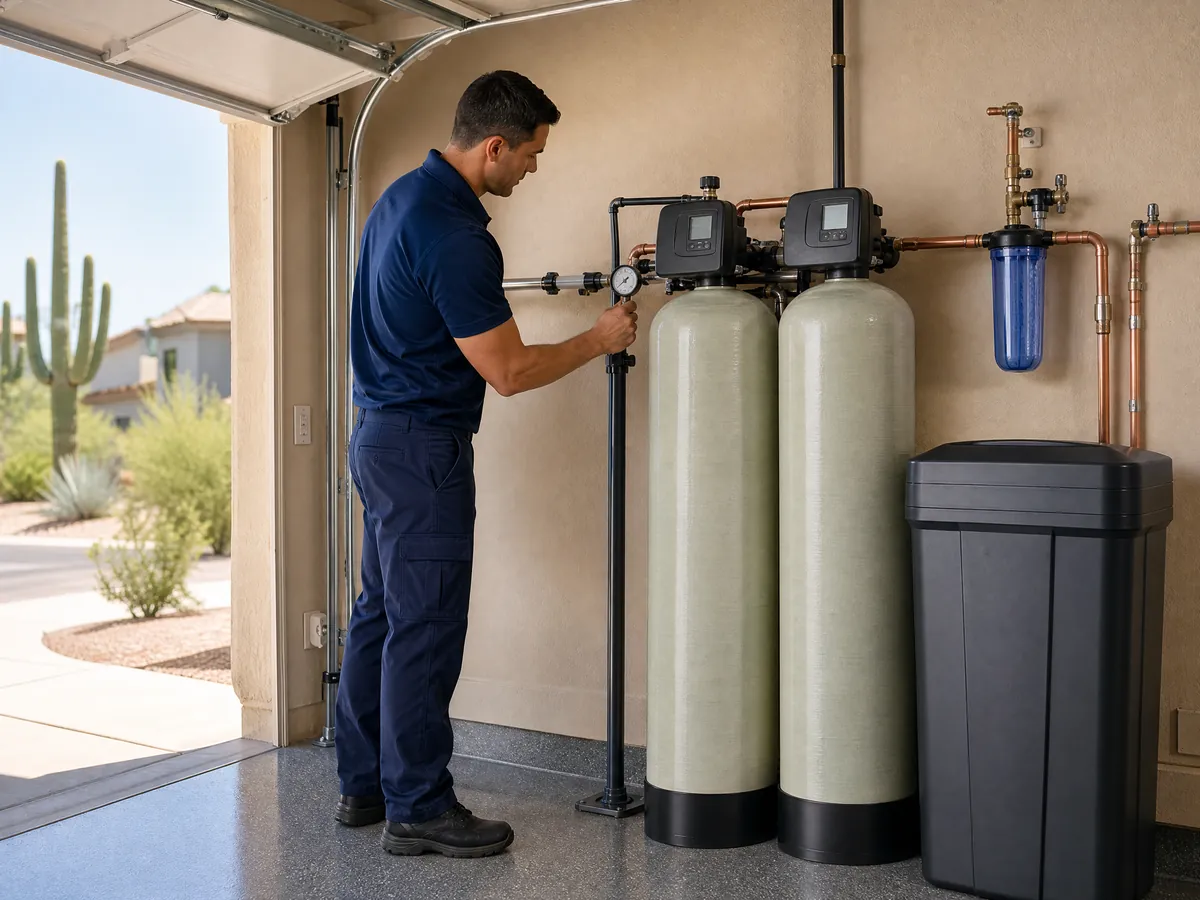
Reverse osmosis is generally a point-of-use drinking-water option. It serves a different purpose from whole-home softening and should be selected around the specific goal and system certification.
Direct answer
What this service is designed to solve
Reverse osmosis is usually a point-of-use drinking-water option installed at a sink or connected appliance. It should be selected around the homeowner’s drinking-water goal, available cabinet space, drain connection, faucet location, filter schedule, and the specific system’s certification.
Common signs and symptoms
- A drinking- and cooking-water goal at one sink
- Interest in a dedicated faucet or refrigerator connection
- A need to compare RO with simpler certified filtration
- An existing RO system with leaks, low production, or overdue filters
What an appointment can determine
- Whether the sink/cabinet area can accommodate the selected system
- What faucet, drain, feed, tank, and appliance connections affect installation
- Which maintenance responsibilities come with the proposed system
What may require more access
- That an uncertified system removes a specific substance
- A home’s complete water chemistry without suitable data or testing
- Filter life independent of use and incoming-water conditions
What to expect during the appointment
- 1
Confirm the symptom, property location, and service goal before work begins.
- 2
Inspect the accessible components and explain what can—and cannot—be concluded from that inspection.
- 3
Present practical options and an upfront flat-rate estimate before authorized work starts.
- 4
Complete only the approved scope, then test the affected plumbing and explain the result and care notes.
Repair, maintenance, and replacement paths
RO drinking-water system
Use point-of-use treatment for drinking and cooking when its certification fits the goal.
Filtration without RO
Consider a simpler certified filter when the goal does not require RO.
Combine with softening
Treat hardness and point-of-use drinking water as separate functions when both goals apply.
Before a recommendation
What affects the repair or installation plan
- Equipment certification and treatment goal
- Cabinet and countertop configuration
- Drain, faucet, tank, and refrigerator connections
- Filter and membrane maintenance schedule
What affects cost
- System stages, certification, and replacement filters
- Cabinet space and access
- Dedicated faucet and sink/countertop requirements
- Drain, feed, storage-tank, refrigerator, or icemaker connections
- Existing pressure and pretreatment conditions
Typical approved scope includes
- System/location compatibility review
- Approved feed, drain, faucet, and appliance connection scope
- Startup flush and leak check
- Maintenance schedule explanation for the selected equipment
Scope boundaries
Common exclusions unless stated in writing
- Claims beyond the selected system’s certification
- Countertop fabrication or electrical work unless listed
- Replacement filters or sanitation visits unless contracted
Qualified workmanship warranty: Dream Team Plumbing provides a two-year workmanship warranty on most qualifying completed work. It applies to labor performed by Dream Team Plumbing and does not cover manufacturer defects, unrelated system failures, water damage, misuse, neglect, improper maintenance, unauthorized alterations, or conditions outside the approved scope. Read warranties and service policies.
East Valley context
Why the property and location matter
RO and water softening solve different problems. East Valley homeowners often compare them, but one does not automatically replace the function of the other.
Straight answers
Reverse Osmosis Systems FAQs
Is reverse osmosis the same as a water softener?
No. A softener addresses hardness throughout the home. RO is typically point-of-use treatment for drinking and cooking water.
Does every RO system remove the same substances?
No. Performance depends on the system design and certification. Review the selected product's verified claims for the specific goal.
Can an RO system connect to a refrigerator?
Many systems can, when pressure, tubing route, appliance requirements, and the selected equipment support that connection.