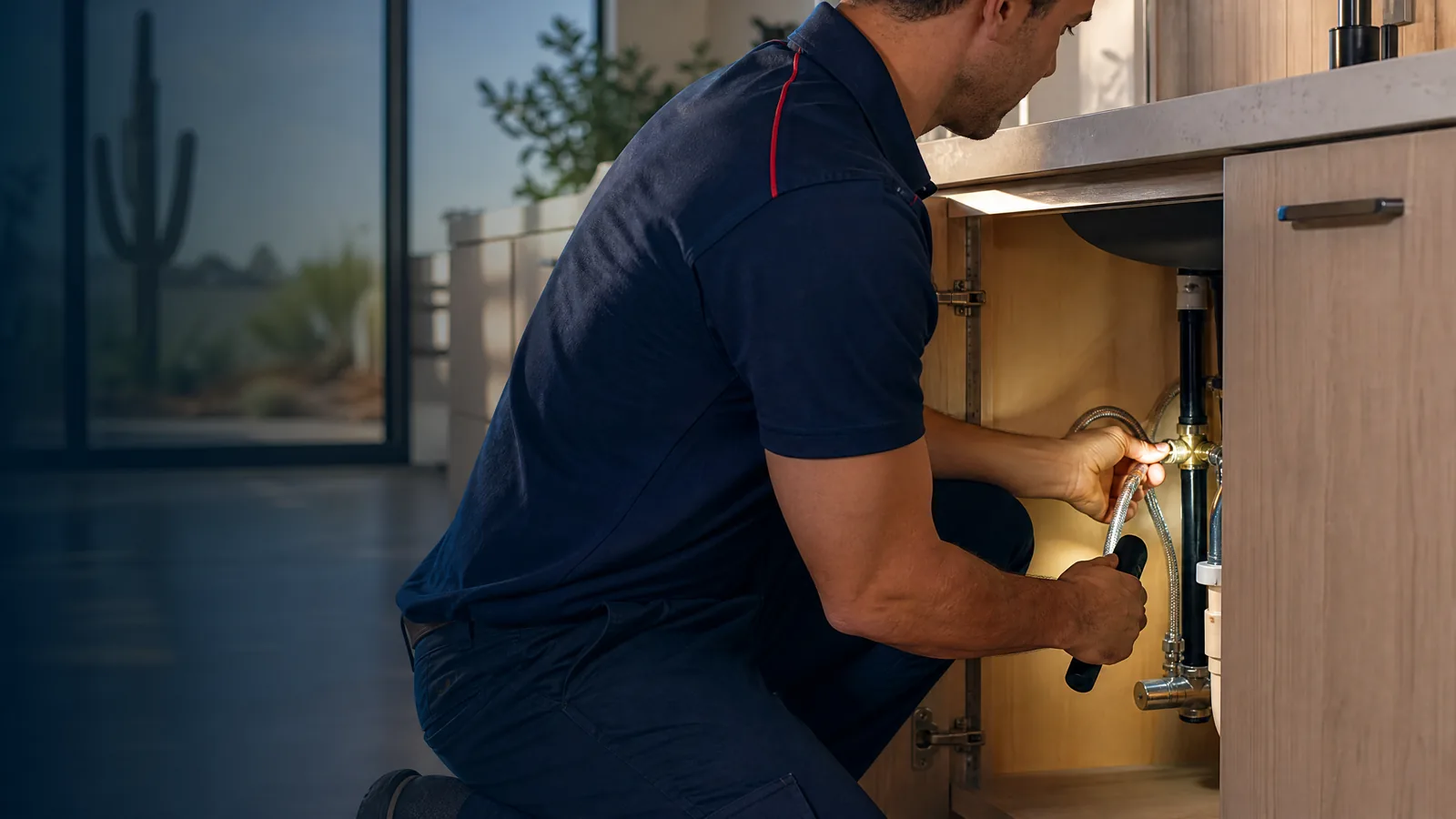
A local shutoff should let you isolate a faucet or toilet without turning off water to the whole home. When a valve leaks, will not close, or is heavily corroded, replacement may make future maintenance safer and more practical.
Direct answer
What this service is designed to solve
Angle stops and fixture shutoff valves should close reliably and remain leak-free at the valve, stem, supply connection, and wall connection. Replacement scope depends on valve type, pipe material, corrosion, access, and whether water can be safely isolated.
Common signs and symptoms
- A valve that drips at the stem or connection
- A handle that will not move
- A shutoff that does not stop fixture flow
- Visible corrosion or an aging supply connection
What an appointment can determine
- Whether the accessible valve operates and leaks
- What connection and supply-line changes are needed
- Whether a larger shutoff or pipe-access issue affects the work
What may require more access
- Condition of concealed pipe inside the wall
- Whether an old valve will fail during operation before it is tested
- Finish damage outside controlled access
What to expect during the appointment
- 1
Confirm the symptom, property location, and service goal before work begins.
- 2
Inspect the accessible components and explain what can—and cannot—be concluded from that inspection.
- 3
Present practical options and an upfront flat-rate estimate before authorized work starts.
- 4
Complete only the approved scope, then test the affected plumbing and explain the result and care notes.
Repair, maintenance, and replacement paths
Operate/assess
Confirm function carefully when the homeowner needs a reliable fixture shutoff.
Replace valve and supply
Install compatible components when leakage, corrosion, or nonoperation supports replacement.
Coordinate access
Define wall/cabinet access when the concealed connection cannot be safely serviced from the opening.
Before a recommendation
What affects the repair or installation plan
- Compression, threaded, soldered, or other connection
- Condition of the pipe stub-out
- Supply-line condition
- Whether related fixture work is already planned
What affects cost
- Valve count, type, and connection
- Pipe material and condition
- Main shutoff availability
- Cabinet, wall, escutcheon, and fixture access
- Supply-line or fixture work completed at the same visit
Typical approved scope includes
- Accessible operation/leak review
- Approved valve/supply replacement
- Leak and shutoff test
- Notes about concealed or larger shutoff concerns
Scope boundaries
Common exclusions unless stated in writing
- Wall, cabinet, tile, paint, or water-damage restoration
- Main-line or whole-home shutoff replacement unless listed
- Concealed pipe conditions outside access
Qualified workmanship warranty: Dream Team Plumbing provides a two-year workmanship warranty on most qualifying completed work. It applies to labor performed by Dream Team Plumbing and does not cover manufacturer defects, unrelated system failures, water damage, misuse, neglect, improper maintenance, unauthorized alterations, or conditions outside the approved scope. Read warranties and service policies.
East Valley context
Why the property and location matter
Mineral buildup and infrequent operation can affect older fixture shutoffs. A valve should not be forced without a plan for isolating water and handling a failed connection.
Straight answers
Angle Stop & Shutoff Valve Replacement FAQs
Should I force a shutoff valve that will not turn?
No. Forcing an aging valve can cause it to leak or break. If water must be isolated, use a known working upstream shutoff or call for help.
Can shutoff valves be replaced during faucet or toilet work?
Yes. Combining related work can make sense when an old valve or supply line will already be disconnected.
Why does a valve leak after being used?
Aging stem packing or internal seals may begin leaking when a valve is moved after a long period. The connection should be checked before assuming tightening will solve it.