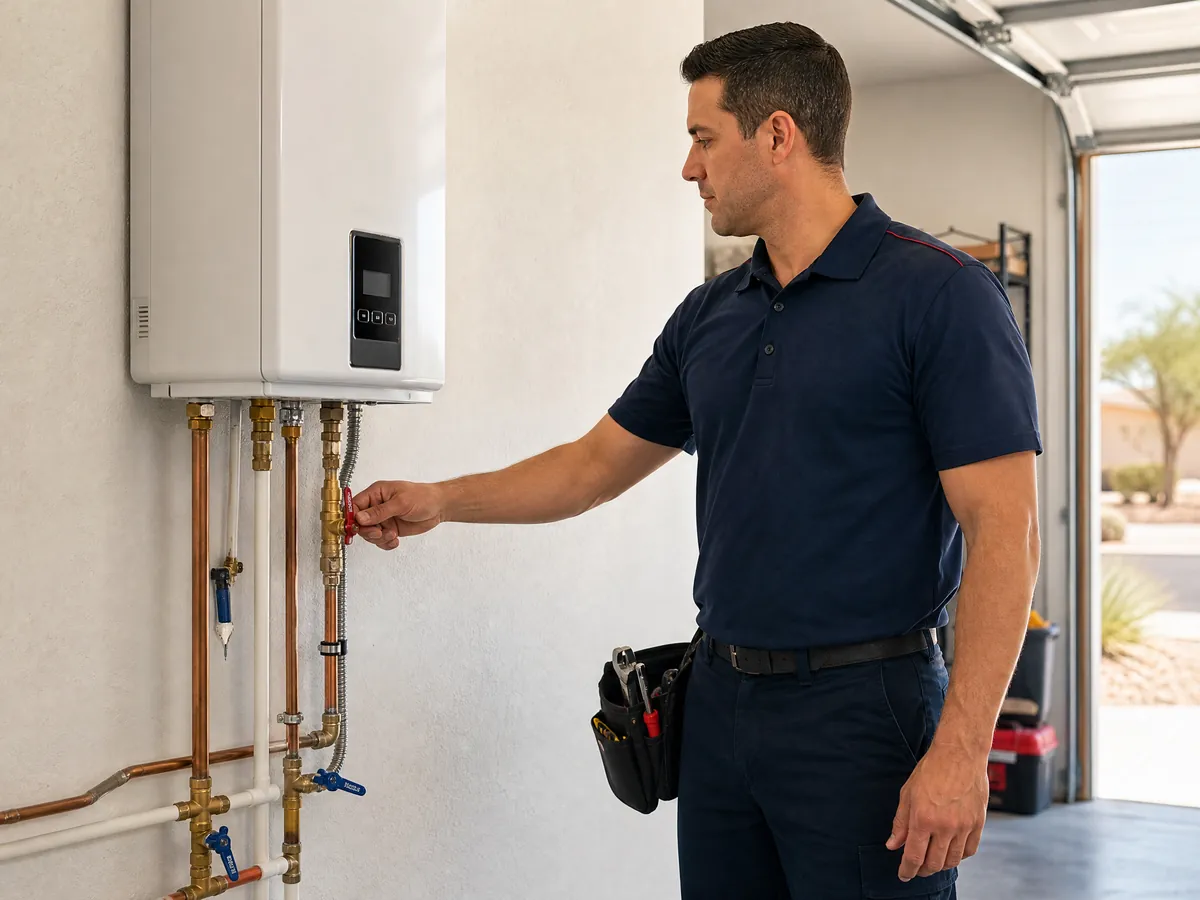
A replacement should fit the household and the installation site—not just match the old label. We review capacity, fuel or power, venting where applicable, access, drain-pan needs, and visible supply connections before installation.
Direct answer
What this service is designed to solve
A replacement water heater should be selected around household demand and the actual installation conditions—not simply by copying the old label. Capacity, energy source, venting, access, drain protection, connections, and manufacturer requirements shape the scope.
Common signs and symptoms
- A tank that is leaking from the body
- Repeated repairs or unreliable hot water
- A unit that no longer meets household demand
- Planned replacement before a disruptive failure
What an appointment can determine
- Which replacement types and capacities fit the visible site and household goal
- Whether accessible shutoffs, supplies, venting, drain protection, or connections need attention
- What plumbing work is included in the proposed replacement scope
What may require more access
- Concealed framing, flue, wiring, or piping conditions before access
- Utility upgrades or other-trade work not included in the plumbing estimate
- Future household demand that the owner has not disclosed
What to expect during the appointment
- 1
Confirm the symptom, property location, and service goal before work begins.
- 2
Inspect the accessible components and explain what can—and cannot—be concluded from that inspection.
- 3
Present practical options and an upfront flat-rate estimate before authorized work starts.
- 4
Complete only the approved scope, then test the affected plumbing and explain the result and care notes.
Repair, maintenance, and replacement paths
Like-for-like tank
Use the existing energy type and a suitable capacity when the location and connections remain appropriate.
Change capacity or type
Compare space, demand, venting, power or gas, condensate, and operating expectations before changing equipment.
Tankless evaluation
Review peak demand and installation requirements separately rather than assuming tankless is a direct swap.
Before a recommendation
What affects the repair or installation plan
- Tank capacity and recovery needs
- Available installation space
- Fuel, electrical, and venting requirements
- Drain-pan, shutoff, and connection condition
What affects cost
- Capacity, efficiency, and equipment type
- Location, stairs, attic/closet/garage access, and removal path
- Venting, drain, gas, electrical, and recirculation conditions
- Shutoff, supply, expansion, pan, and discharge piping needs
- Permit or other-trade requirements where applicable
Typical approved scope includes
- Installation-site and demand review
- Written approved plumbing scope
- Removal/installation terms stated in the estimate
- Connection and operational testing after approved work
Scope boundaries
Common exclusions unless stated in writing
- Unlisted electrical, gas-utility, roofing, framing, cabinet, or finish work
- Manufacturer warranty administration unless stated
- Water-damage restoration or hazardous-material handling
Qualified workmanship warranty: Dream Team Plumbing provides a two-year workmanship warranty on most qualifying completed work. It applies to labor performed by Dream Team Plumbing and does not cover manufacturer defects, unrelated system failures, water damage, misuse, neglect, improper maintenance, unauthorized alterations, or conditions outside the approved scope. Read warranties and service policies.
East Valley context
Why the property and location matter
Garage, closet, and attic installations create different access and drain-protection decisions in East Valley homes. The installation plan should reflect the actual site.
Straight answers
Water Heater Installation & Replacement FAQs
Should the new water heater be the same size as the old one?
Not automatically. The household, available utilities, and installation space should be reviewed before selecting capacity.
What is checked after installation?
Connections, shutoffs, safe operation, temperature settings, and the installed equipment are checked before the system is placed into normal use.
Can I plan a replacement before the tank leaks?
Yes. Planning ahead can provide more time to compare equipment and site requirements without an active leak driving the decision.