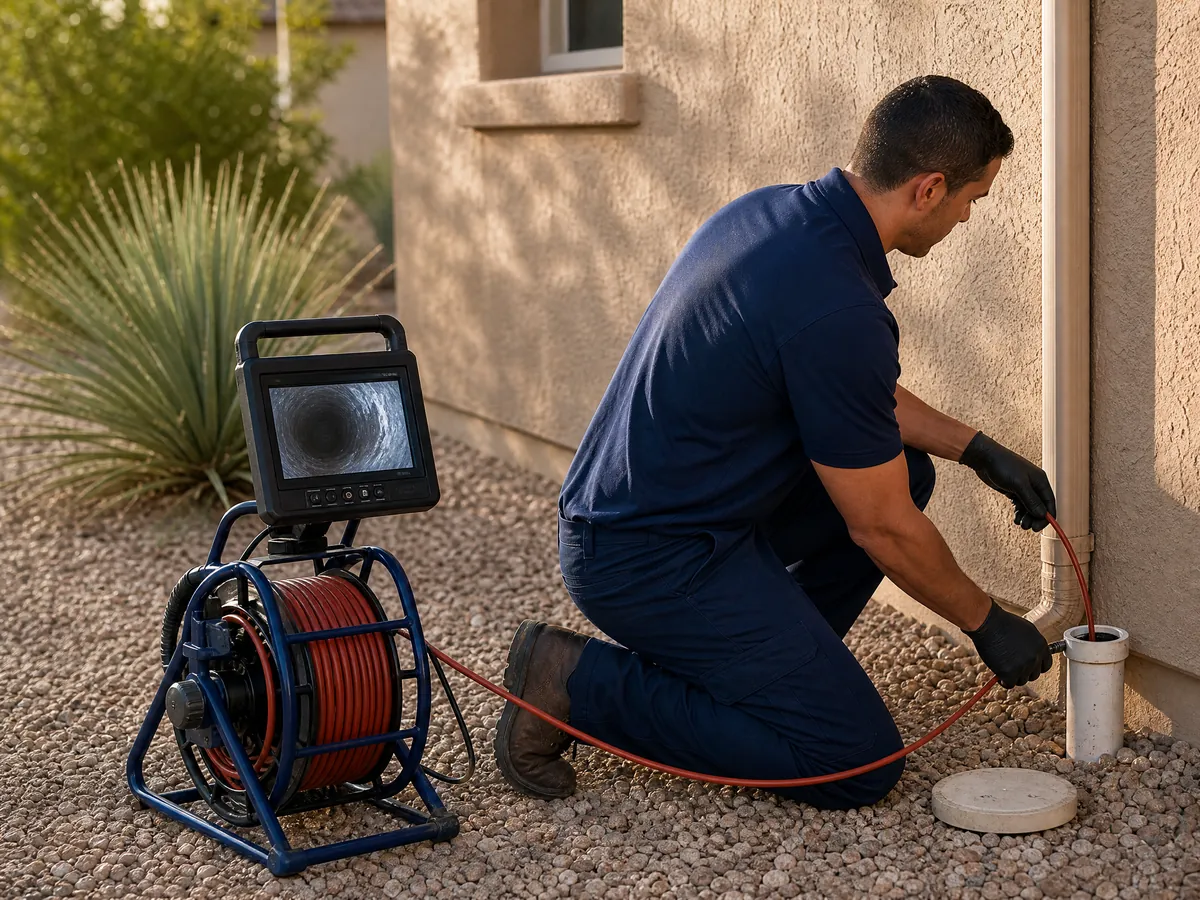
A camera inspection can show visible conditions inside an accessible line, but it is not always the first step. The line may need to be cleared before the camera can travel far enough to provide useful information.
Direct answer
What this service is designed to solve
A sewer camera can document visible conditions inside an accessible, sufficiently clear line. It is useful for recurring main-line problems, suspected defects, and repair planning, but it cannot see through opaque water, heavy debris, or a complete blockage.
Common signs and symptoms
- Recurring main-line backups
- A line that has needed repeated clearing
- Possible roots, offsets, breaks, or heavy buildup
- A repair decision that depends on defect location
What an appointment can determine
- Visible pipe material, direction, joints, offsets, roots, buildup, or breaks within camera reach
- Approximate location of visible conditions when locating equipment can be used
- Whether the recorded condition supports repair planning or further access
What may require more access
- Conditions hidden by standing water, debris, or an uncleared blockage
- Pipe condition beyond the camera’s access and travel
- Ownership, property-line responsibility, or exact depth without separate verification
What to expect during the appointment
- 1
Confirm the symptom, property location, and service goal before work begins.
- 2
Inspect the accessible components and explain what can—and cannot—be concluded from that inspection.
- 3
Present practical options and an upfront flat-rate estimate before authorized work starts.
- 4
Complete only the approved scope, then test the affected plumbing and explain the result and care notes.
Repair, maintenance, and replacement paths
Inspect after clearing
Create a useful view once a blocked line has been opened sufficiently.
Document recurring symptoms
Record visible conditions that may explain repeated main-line problems.
Plan repair access
Use visible condition and location information as one part of a repair plan.
Before a recommendation
What affects the repair or installation plan
- Whether the line is open enough to inspect
- Cleanout location and access
- Pipe material and visible condition
- Whether a located defect changes the repair plan
What affects cost
- Access point and pipe route
- Whether cleaning is needed first
- Camera reach and line diameter
- Locating/recording needs
- Additional repair investigation
Typical approved scope includes
- Camera attempt through an agreed access point
- Explanation of visible findings and limitations
- Recorded images/video when included in the estimate
- Related repair options only when supported by the view
Scope boundaries
Common exclusions unless stated in writing
- Guaranteed access through every line
- Diagnosis through opaque water or a solid blockage
- Excavation, repair, or ownership determination unless stated
Qualified workmanship warranty: Dream Team Plumbing provides a two-year workmanship warranty on most qualifying completed work. It applies to labor performed by Dream Team Plumbing and does not cover manufacturer defects, unrelated system failures, water damage, misuse, neglect, improper maintenance, unauthorized alterations, or conditions outside the approved scope. Read warranties and service policies.
East Valley context
Why the property and location matter
Slab layouts, additions, mature landscaping, and cleanout placement can affect camera access and location work in East Valley properties.
Straight answers
Sewer & Drain Camera Inspections FAQs
Can a camera see every plumbing problem?
No. A camera shows the interior of piping it can access and travel through. It does not directly measure every cause of slow drainage or leaks outside the viewed section.
Does the line have to be cleared first?
Sometimes. Standing water or a solid obstruction can prevent the camera from seeing or reaching the area of concern.
Does a visible defect always require full replacement?
No. Location, severity, pipe condition, access, and the history of the problem all matter when comparing repair options.